

Land & Legacy Fridays
Understanding Clean Title Deeds in Kenya: The Ultimate Guide to Safe Land Ownership
Buying land in Kenya is one of the most rewarding financial milestones you can achieve. Whether you are looking to build a family home in the suburbs of Nairobi, start an agricultural venture in the Rift Valley, or invest in fast-appreciating commercial plots, land offers a sense of permanence and security.
Buying land in Kenya is one of the most rewarding financial milestones you can achieve. Whether you are looking to build a family home in the suburbs of Nairobi, start an agricultural venture in the Rift Valley, or invest in fast-appreciating commercial plots, land offers a sense of permanence and security.
However, the Kenyan real estate landscape can be a minefield for the unprepared. We have all heard the cautionary tales: demolition notices, multi-owner disputes, or court battles that drag on for decades.
At the center of every safe real estate transaction is a single, vital concept: a Clean Title Deed. But what exactly does this mean, and how can you ensure the piece of shamba you are eyeing is completely safe to purchase? Let’s break it down.
What is a "Clean" Title Deed?
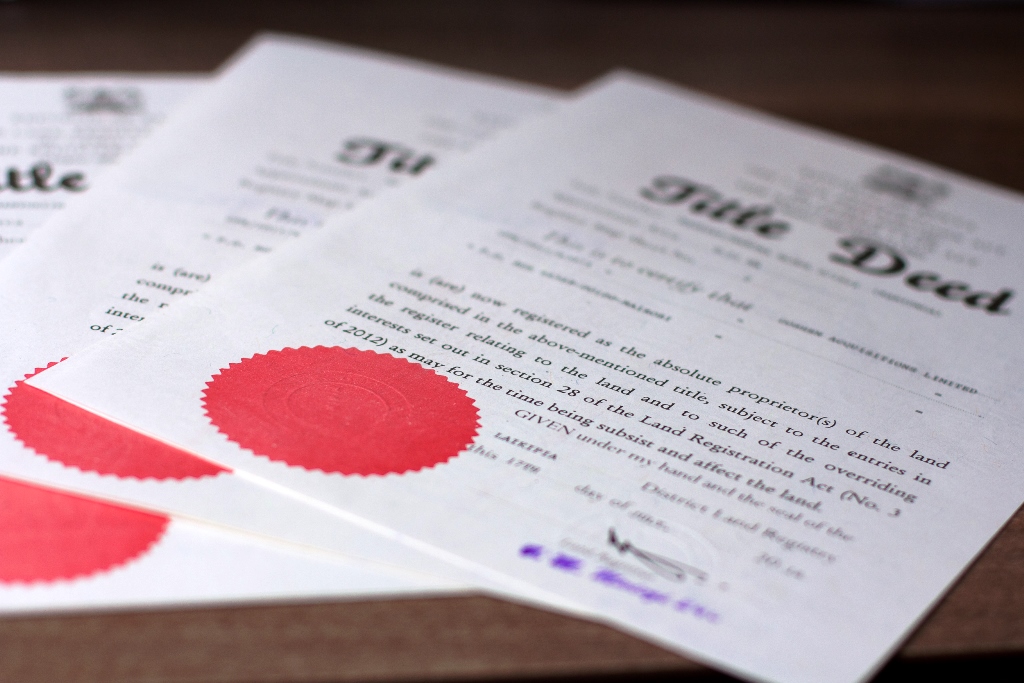
In simple terms, a title deed is an official legal document issued by the Government of Kenya that proves ownership of a specific piece of land.
A title deed is considered "clean" when it satisfies three crucial conditions:
True Ownership: The person or company selling the land is the actual, legally registered owner at the Ministry of Lands.
Zero Encumbrances: The property is free from legal liabilities, financial claims, or restrictions. It has not been used as collateral for an unpaid bank loan, it isn’t tied up in a succession/inheritance dispute, and it does not carry a government caveat.
Accurate Parameters: The physical size, location, and boundaries of the land exactly match the official survey records kept by the government.
Freehold vs. Leasehold: Knowing the Difference
Before diving into verification, you must understand the two main types of land tenure systems in Kenya. They dictate what kind of title you will hold:
Freehold Title: This gives you absolute ownership of the land for an indefinite period. There is no land rent to pay to the national government, though you still owe county rates if applicable. This is common with agricultural land and rural residential plots.
Leasehold Title: This means you own the property for a specific period, usually 99 years for urban properties (like land within Nairobi City, Mombasa, or Kisumu). You are required to pay an annual "land rent" to the National Government, and you must apply for a renewal when the lease expires.
How to Verify and Secure a Clean Title Deed
Never take a seller’s word at face value—no matter how trustworthy they seem or how neat the paperwork looks. Securing a clean title requires a deliberate, step-by-step verification process.
1.Conduct an Official Land Search:Takes 1-3 Business Days.
Obtain a copy of the title deed from the seller and run an official land search. This can be done digitally via the government's Ardhisasa platform or at the local Land Registry for a statutory fee of KSh 500 to KSh 1,000. The resulting official search certificate will reveal the true registered owner and any active bank charges or cautions.
2.Verify Registry Records via Ardhisasa:Requires Owner Consent.
The Ministry of Lands uses the digital Ardhisasa portal to minimize fraud. When you initiate a search online, the system automatically sends a notification to the registered owner. They must log in and click "Consent" before the system releases the certified search results to you. If a seller delays or refuses to give consent on the platform, treat it as an immediate red flag.
3.Conduct a Physical Site Visit & Boundary Check:Hire a Licensed Surveyor.
Go to the land in person. Do not just look at it; hire a licensed surveyor to cross-reference the property's coordinates using the official Deed Plan or mutation form. Ensure that the survey beacons are physically present and that the boundaries do not overlap with public utilities, roads, or neighboring parcels.
4.Obtain Rates and Rent Clearance Certificates:Clearing Financial Liabilities.
Before any land can be legally transferred to your name, the seller must clear all financial pending items. They must provide a Land Rates Clearance Certificate from the local County Government and, if the property is a leasehold, a Land Rent Clearance Certificate from the National Government.
5.Get Land Control Board (LCB) Consent:Mandatory for Agricultural Land.
If the property you are buying is classified as agricultural, both the buyer and the seller must appear before the local Land Control Board. The board ensures the transaction is fair and sustainable, and they issue an LCB Consent to Transfer. Without this, the transfer is legally void.
Common Red Flags to Watch Out For
As a smart investor, you should be ready to walk away from a deal if you encounter any of the following warning signs:
The price is too good to be true: If prime land in a fast-growing area is being sold at 40% below the prevailing market rate, there is almost always a hidden catch or an active scam.
Refusal to use Ardhisasa: If a vendor insists on using old, manual-only routes and strongly avoids digital verification on the Ministry of Lands portal, step back.
Pressure to pay quickly: Scammers thrive on urgency. If they claim "another buyer is making an offer in an hour" to force you to bypass due diligence, do not give in.
Spousal consent issues: Kenyan law protects matrimonial property. If a married individual is selling family land without a signed, witnessed Spousal Consent Affidavit, the transaction can be easily overturned in a court of law later.
The Transfer Process: Crossing the Finish Line
Once you have verified that the title is clean and you have executed a sale agreement (ideally drafted by an advocate), your legal representative will log the documents for assessment.
You will be required to pay Stamp Duty, which is a statutory tax calculated based on a valuation done by a Government Valuer:
4% of the land value for properties located within municipalities and cities.
2% of the land value for properties located in rural/agricultural areas.
Once paid, the transfer documents are stamped, franked, and registered. The old title is canceled, and a brand-new, clean Title Deed is issued bearing your name and national ID number.
Final Pro Tip: The Post-Purchase Search
A few weeks after receiving your new title deed, always conduct an independent, fresh land search. This confirms that the registry records have been completely and accurately updated, cementing your status as the absolute legal owner of your new property.
Partnering with an established, transparent property partner like Acremann Properties ensures that all background checks, survey verifications, and clearance certificate legalities are cleanly handled upfront—giving you ultimate peace of mind.
Trusted guidance. Transparent process.
Buying land from abroad or in Kenya?
Speak with Acremann about verified titles, site visits, and diaspora-friendly purchase support.